Tick Prevention for Dogs: Recognizing the Risks and Taking the Right Action
Ticks are more than just annoying little crawlers: They can transmit dangerous diseases to your dog. But you don’t have to just sit back and watch! We’ll explainwhat makes ticks so dangerous, how to remove a tick properly, and what options are available for tick protection for dogs.
What are ticks—and when are they active?
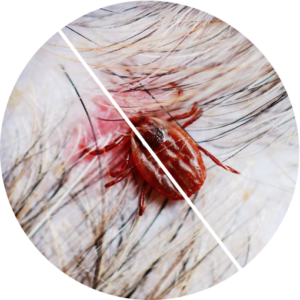
Ticks are arachnids that feed on the blood of their hosts. They become active at temperatures as low as about 7 °C, which is why their peak season runs fromMarch/April through October—and, in regions with mild winters, increasingly year-round. They lurk in tall grass, at the edges of forests, in the underbrush, and in bushes, and can be brushed off when your dog walks by. They then seek out thin, warm areas of skin: the ears, neck, armpits, groin, and between the toes.
Why are ticks so dangerous for dogs?
When feeding on blood, a tick can transmit pathogens. Transmission of some diseases often does not occur until several hours later. Therefore,the sooner the tick is removed, the lower the risk. The most well-known diseases are:
- Lyme disease—the most common (caused by Borrelia bacteria): fever, fatigue, intermittent lameness, swollen joints.
- Anaplasmosis—a bacterial infection, often accompanied by fever, fatigue, and joint pain.
- Babesiosis—“dog malaria”: a parasite that destroys red blood cells; the disease can be severe. The primary vector is the wood tick.
- TBE– A viral disease of the nervous system; rare in dogs, but possible.
Found a tick? Here's how to remove it properly
Thoroughly check your dog after every outing, preferably by running your fingers against the grain of the fur. If you find a tick:
- Usetick tweezers, a tick hook, or a tick card, placing themas close to the skinas possible.
- Pull it out slowly and straight, without squeezing the tick's body or twisting it.
- Do not use home remedies such asoil, glue, or nail polishto remove the tick—they irritate the tick, causing it to release more saliva.
- Afterward, disinfect the area and monitor it.
Has your dog been bitten by a tick?
Keep an eye on your dog after a tick bite; if it shows symptoms such as fever, lameness, or loss of appetite, please take it to the vet.
What Can You Do About Ticks? An Overview
There is no single perfect solution for tick protection. Even with chemical spot-on treatments and chewable tablets from the veterinarian, tick bites cannot be 100% prevented. In addition, these products contain synthetic active ingredients that can put a strain on a dog’s body. How to proceed in this situation is always a personal decision. In any case, daily checkups and prompt removal are essential.
No method is 100% reliable!
Even the best protection is never 100 percent effective—this applies to both chemical and natural remedies. Thoroughly checking yourself after every outing remains the most important precaution.
Tick Protection for Horses
Are you looking for tick protection for your horse? Find everything you need to know at "Tick Protection for Horses."
When does tick season start?
Active at temperatures of about 7 °C and above; peak season is from March/April through October, and in mild winters, it may be active year-round in some areas.
When should I start using tick protection for my dog?
Tick protection for your dog is especially important starting with the first warm days of spring, as ticks become active at temperatures around 7 °C. In regions with mild winters, protection may even be necessary year-round. Dogs that frequently roam through tall grass or forests are particularly at risk, as ticks tend to thrive in those areas.
How do I remove a tick properly?
Using tweezers or a hook, gently pull it straight out as close to the skin as possible; do not squeeze or twist it, then disinfect the area. Do not use oil to remove it.
 Change your pet's life